
TOOLS & RESOURCES
As a firm working with left-flank movements and projects who are often in conflict with the state and state entities, we are often asked: why engage in policy work at all? Here’s how we start this conversation with our clients and partners.
Deciding if and when to negotiate a compromise is a delicate strategic balance, but in the policy process we are often met with the limits of our current power. If you are at the limit of the pressure you are able to exert on an elected official or legislative body, you will arrive at a time to negotiate your wins - and what you must let go for the next fight. We created this tool to support our clients in this process.
This tool is a policy evaluation framework. It guides users through steps to analyze policies for threats to the bodily autonomy of pregnant people, parents, and just about anyonewas developed by Patient Forward and CAIP, with significant leadership and contributions by Megan Donovan. This tool was created with generous input and thought-partnership from stakeholders including organizers, policymakers, and subject matter experts.
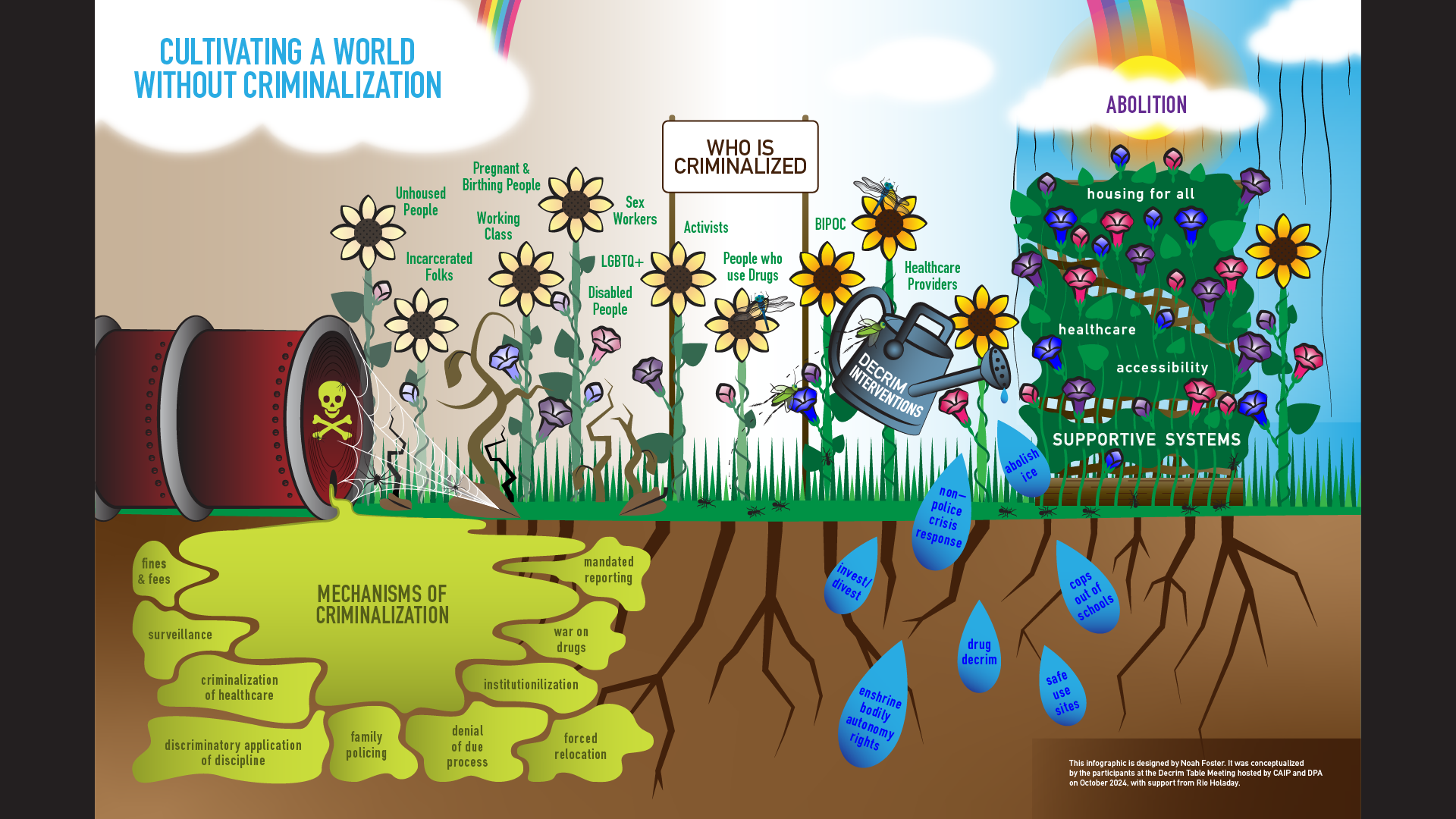
Conceptualized by participants at CAIP and Drug Policy Alliance’s Decriminalization Policy Strategy Meeting in October of 2024, this graphic depicts a landscape where a barrel is spilling a toxic sludge of “mechanisms of criminalization” such as mandated reporting and surveillance into the soil. The sunflowers and morning glories, representing communities of people who are criminalized are pale and wilting nearest to this toxic spill. Moving left across the graphic, the flowers begin to revive as they are watered from a can of “decrim interventions” such as non-police crisis response and invest/divest. Past the watering can, the plants are thriving on a trellis of supportive systems like healthcare and housing for all, under the cleansing rain cloud of abolition. We hope this tool will help you have an intersectional, cross-movement conversation about decriminalization.
Resisting the Criminalization of Reproductive Autonomy: Policy Do’s and Don’ts
In response to the expanding criminalization of reproductive autonomy, a group of reproductive justice and anti-criminalization organizers and advocates came together in 2019 to develop a shared analysis and resistance strategies. This is a preliminary list of policies which can contribute contribute to increased surveillance, policing, criminalization, and punishment of pregnant people, parents, and providers emerged from these conversations. This document is intended to inform policymakers and advocates concerned about reproductive justice, intimate partner and domestic violence, public health, and criminalization about the potential consequences of the policy approaches outlined below, and to offer alternative strategies that carry less risk of contributing to the criminalization of reproductive autonomy.
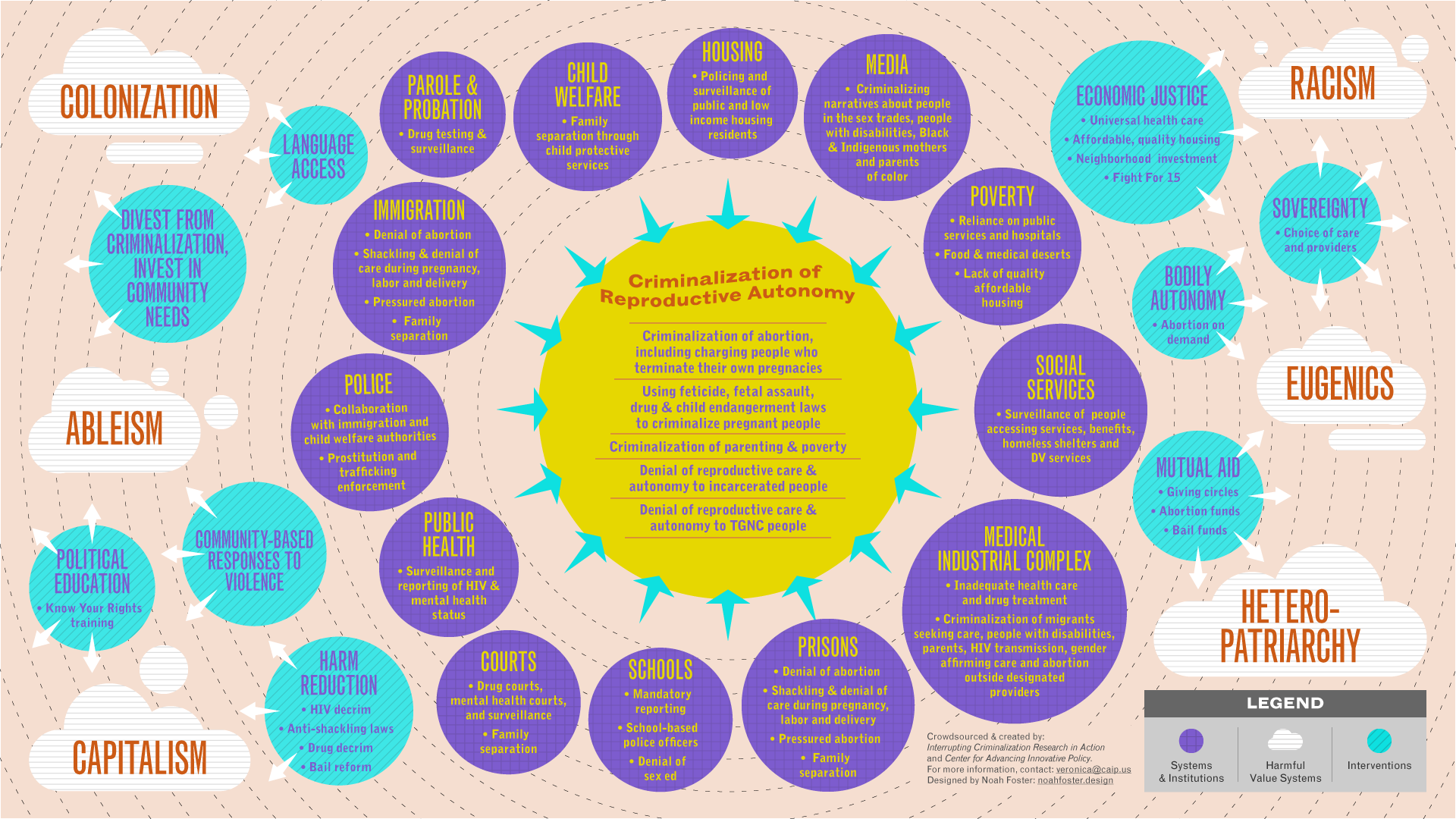
This map was created to show how the criminalization of reproductive autonomy functions, and how it is all part of a larger web. There are many sites and mechanisms of criminalization of reproductive autonomy in this violent system—which also means there are many points and opportunities for intervention and resistance available to us.
LAUNCH WEBINAR: Policy for Safety White Paper Series: Healthcare
At a political moment in which policy change rarely feels transformative – or, at federal levels, even possible – we know that our movements must use every tool at our disposal to resist, and to build the world we want. We went back to our policy work with orgs around the country, and pulled from years of data from developing movement demands to see what other ways our government might provide safety to our communities. This white paper series is our answer to the question: what keeps our communities safe?
This question we asked years ago now has led us to take a holistic view of safety that accounts for the root causes of unsafe conditions in all our agendas, and to the creation of this series of papers.
WEBINAR: Harm Reduction & Reproductive Justice
In October 2023 we hosted a conversation on the intersection of Harm Reduction and Reproductive Justice with Deon Haywood of Women With A Vision, Kassandra Frederique of Drug Policy Alliance, and Dr. Jamila Perritt of Physicians for Reproductive Health. You can watch it below:

SIGN UP FOR OUR NEWSLETTER